Forget the Measuring Cups: How to Cook Thai Food the Way It Was Always Meant to Be Made
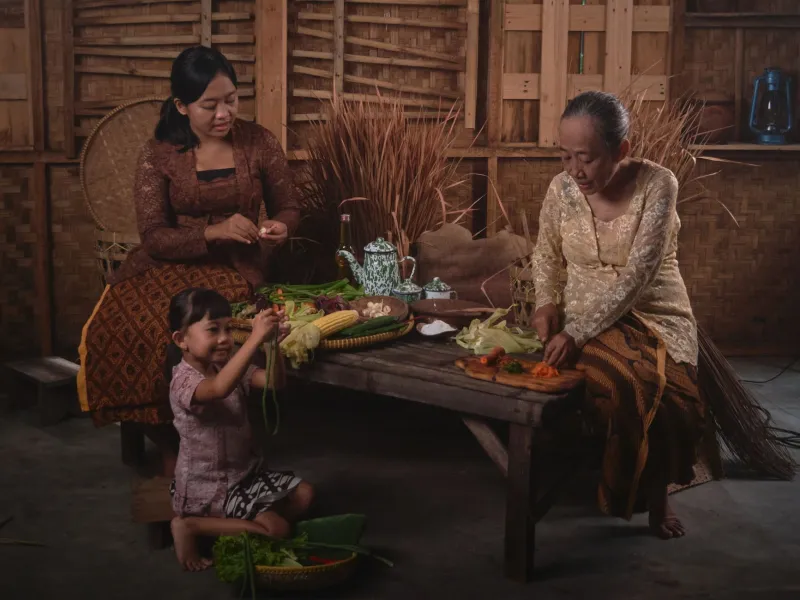
If you've ever watched an older Thai cook in action, you've probably noticed something that's equal parts impressive and maddening: they don't measure anything. Not the fish sauce, not the palm sugar, not the lime juice. They pinch, pour, taste, and adjust — all while carrying on a conversation and keeping one eye on a pot of rice. And somehow, the food is perfect every single time.
That's not a magic trick. It's a skill. And the good news is, it's one you can actually learn.
Why Recipes Can Only Take You So Far
Let's be honest about what a recipe is: it's a snapshot. It captures what worked for one cook, in one kitchen, with one specific set of ingredients, on one particular day. The problem is that Thai cooking is full of variables that no recipe can fully account for.
That fish sauce you bought at your local Asian grocery? It might be saltier or more pungent than the brand the recipe developer used. The limes you grabbed at the supermarket this week might be more acidic than the ones from last month. Your palm sugar could be drier, your chilies hotter, your coconut milk thicker. Every single one of those differences shifts the balance of the dish — and a recipe written in a test kitchen somewhere has no way of knowing what you're working with.
Traditional Thai cooks understand this intuitively. They don't cook to a number. They cook to a flavor.
The Four Pillars You're Always Chasing
Thai cuisine is built on a balancing act between four core tastes: salty, sweet, sour, and spicy. A fifth element — sometimes described as savory or umami — runs underneath everything, usually delivered by fish sauce, shrimp paste, or fermented ingredients. When these elements are in harmony, a dish tastes alive. When one dominates, something feels off, even if you can't immediately put your finger on why.
Here's the thing nobody tells you: you already know what balance tastes like. You've eaten Thai food at restaurants. You've had that moment where you take a spoonful of a really good tom kha and think yes, that's exactly right. That memory lives in your palate. Your job as a home cook is to chase that feeling rather than chase a number on a measuring spoon.
Start paying attention to what you're tasting at every stage of cooking, not just at the end. Add fish sauce and notice the saltiness before the rest of the flavors develop. Add lime and feel how it brightens everything. Add a little sugar and watch how it softens the sharp edges. This is how you start building a map of the dish in real time.
Learning to Read the Visual and Textural Cues
Good Thai cooking isn't just about taste — it's about what you see and feel, too. A lot of home cooks wait until a dish is basically done before they start evaluating it, and by then it's much harder to correct course.
Take curry paste, for example. When you're frying it in coconut cream at the start of a curry, you're looking for the paste to deepen in color and the oil to start separating out around the edges of the paste. That split is a visual cue that the raw, harsh flavors have cooked off and the aromatics have bloomed properly. If you skip that step or rush past it, the curry will taste flat no matter what you do afterward.
With stir-fries, you're watching for wok hei — that slightly charred, smoky quality that comes from high heat and fast movement. You can smell it before you can see it. If your kitchen smells like a restaurant and the edges of your vegetables are starting to catch a little color, you're on the right track. If everything is just steaming in a puddle of liquid, your heat isn't high enough and you're going to end up with something soggy.
For soups and broths, texture tells you a lot. A properly made tom yum should have a broth that feels light but complex on the tongue — not watery, not heavy. If it tastes thin, it usually needs more fish sauce or a longer simmer with the aromatics. If it tastes muddy or flat, it often needs acid: more lime, or sometimes a small splash of tamarind water.
Building Your Palate on Purpose
This kind of intuitive cooking doesn't happen overnight, but you can accelerate the learning curve if you're intentional about it.
One of the most useful exercises is to taste your dish in stages and deliberately throw it out of balance before you fix it. Add too much fish sauce on purpose. Notice what that tastes like — sharp, almost harsh, the savory flavor going into overdrive. Then add a little sugar and feel how it pulls the saltiness back. Then add lime and feel how the whole thing opens up. You're essentially training your palate to recognize imbalance and understand which direction to correct it.
Another approach: stop measuring for one dish per week. Pick something you've made before, something you're comfortable with, and just cook it by feel. Taste constantly. Take notes if you want, but notes about flavor rather than amounts — "needed more acid at the end" or "the paste was still a little raw-tasting, should have fried it longer." Over time, those notes become instincts.
When It's Okay to Use a Recipe as a Starting Point
None of this means you should throw your cookbooks in the trash. Recipes are genuinely useful when you're working with an unfamiliar dish and need a rough framework — a sense of which ingredients belong together, in what general proportions, and in what order. That scaffolding matters, especially when you're just getting started with Thai cooking.
But treat the recipe as a conversation, not a contract. Read it through, understand the logic of it, and then cook with your eyes and your tongue doing most of the work. The recipe might say two tablespoons of fish sauce. Start with one and a half, taste it, and decide for yourself. That small act of agency is where real cooking starts.
The Confidence Is the Skill
Here's the part that doesn't get talked about enough: a huge part of intuitive cooking is just confidence. Thai grandmothers aren't hesitant. They commit to a decision, taste the result, and adjust without drama. That willingness to course-correct without panicking is something most of us have to consciously practice, especially if we grew up thinking cooking was about following instructions correctly.
You're going to make dishes that are too salty or too sour or weirdly flat. That's not failure — that's data. Every time you cook Thai food and something doesn't land quite right, you learn something about how the flavors interact. Eventually, you stop second-guessing yourself and start trusting the process.
That's when Thai cooking stops feeling like a project and starts feeling like second nature. And honestly? That's when it gets really fun.