Pad See Ew Secrets: What the Street Carts in Bangkok Do That You're Probably Not
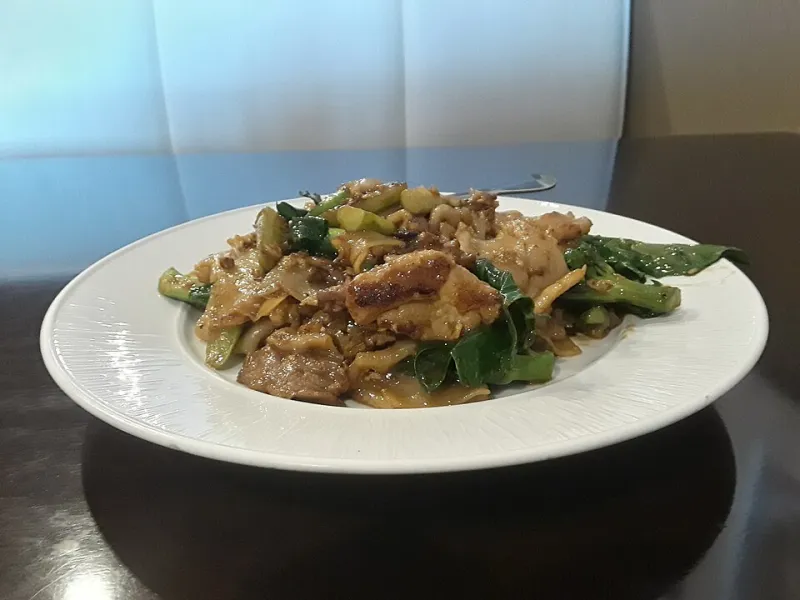
Photo: Ser Amantio di Nicolao, CC BY-SA 3.0, via Wikimedia Commons
There's a cart on Silom Road that's been serving pad see ew since before most of us were born. The cook works a blackened wok over a flame so hot it would terrify most American home kitchens. She's not measuring anything. She's not using light soy sauce from the grocery store aisle. And she's definitely not adding broccoli.
Yet somehow, that's the dish most of us are trying to recreate at home — and failing. Not because we're bad cooks, but because somewhere between Thailand and the US, pad see ew got quietly, thoroughly Americanized. Let's talk about what actually happened, and what you can do about it.
The Dish That Got Lost in Translation
Pad see ew — literally "stir-fried soy sauce noodles" — is working-class Thai food. It's quick, filling, cheap, and deeply savory. In Thailand, you'll find it at street stalls, night markets, and food courts, where it's usually eaten standing up or perched on a plastic stool. The flavors are bold but not complicated: wide rice noodles, dark soy sauce, egg, Chinese broccoli (gai lan), and your protein of choice.
What you get at most American Thai restaurants is a softer, sweeter, more veggie-forward interpretation. The noodles are often too pale, the sauce too mild, and the dish almost always includes regular broccoli florets — a substitution that became standard because gai lan can be hard to source in bulk. None of this makes the American version bad, exactly. It just makes it something else.
The Soy Sauce Problem Is Bigger Than You Think
This is where most home cooks go wrong first. Pad see ew gets its color and its deep umami backbone from dark soy sauce — not regular soy sauce, not low-sodium soy sauce, and definitely not the all-purpose bottle sitting next to your takeout menus.
Dark soy sauce is thicker, less salty, and has a slightly sweet, almost molasses-like quality. It's what gives the noodles that rich mahogany color you see in good versions of the dish. Regular soy sauce used alone will make your pad see ew taste thin and salty without that roasted depth.
The ratio that works: use dark soy sauce as your primary seasoning, with a smaller amount of regular (or light) soy sauce for saltiness, and a touch of oyster sauce for body. Some cooks add a tiny pinch of sugar. That's it. No fish sauce in this dish — that's a different flavor profile entirely.
You can find dark soy sauce at any Asian grocery store, and increasingly at Whole Foods or on Amazon. Brands like Healthy Boy or Kwong Hung Seng are solid choices.
Protein: What's Actually on the Menu in Thailand
In Bangkok and central Thailand, pad see ew is most commonly made with pork or chicken. Beef shows up too, especially in versions influenced by Chinese-Thai cooking. Shrimp is less typical for this dish than it is for, say, pad thai.
In the US, you'll see tofu offered as a default vegetarian option — which is fine — but you'll also see a lot of menus pushing shrimp as a premium protein. That's more about American seafood preferences than Thai tradition.
Here's the thing about protein in pad see ew: it should be thinly sliced, cooked fast, and not overcrowded in the pan. If you're piling chicken thighs into a home skillet, you're steaming, not stir-frying, and the texture will be wrong.
The Wok Problem (And the Real Solution)
Every article about Thai stir-frying eventually gets to wok hei — that smoky, slightly charred quality that comes from cooking over extremely high heat. And yes, it matters. But here's the honest truth: you're probably not going to replicate it perfectly on a standard American gas range, let alone an electric coil stove.
What you can do is get closer than most people bother trying.
First, preheat your pan aggressively. Whether you're using a carbon steel wok or a wide stainless skillet, let it get ripping hot before anything goes in. You should see a faint wisp of smoke. Second, cook in smaller batches. The biggest mistake home cooks make is crowding the pan. One serving at a time is not a joke — it's how the street cart cooks do it, because that cart wok is only slightly bigger than your skillet anyway. Third, don't stir constantly. Let the noodles sit against the hot surface for 20 to 30 seconds before tossing. That's where the char happens.
The egg gets pushed to the side, scrambled briefly, then folded in — not pre-scrambled in a bowl, not stirred in raw. Timing matters here.
Gai Lan vs. Regular Broccoli: Does It Actually Matter?
Yes. Gai lan (Chinese broccoli) has a slightly bitter, grassy flavor that cuts through the richness of the dark soy sauce beautifully. Regular broccoli is milder and sweeter, which is why the American version of pad see ew can taste a little one-dimensional — you lose that contrast.
The good news: gai lan is not hard to find anymore. Most Asian grocery stores carry it year-round, and it's showing up at farmers markets in cities with large Asian American communities. If you absolutely cannot find it, broccolini is a closer substitute than standard broccoli — it has a bit more bitterness and the stems stay firm under high heat.
A Framework for Getting It Right
You don't need a $200 carbon steel wok or a commercial burner to make a genuinely good pad see ew at home. You need:
- Wide fresh rice noodles (look for them refrigerated at Asian markets — dried noodles work but need extra attention to texture)
- Dark soy sauce as your base, balanced with oyster sauce and a splash of regular soy
- Gai lan or broccolini, cut into 2-inch pieces
- Your protein of choice, sliced thin and cooked in a hot, uncrowded pan
- High heat and patience — let things sear, not steam
The dish should taste savory and slightly smoky, with a faint char on the noodles and a richness that doesn't tip into sweet. If it tastes like soy sauce soup with noodles, your heat wasn't high enough. If it's too salty, you used too much regular soy.
Pad see ew is forgiving once you understand the logic. And once you nail it at home, you'll start tasting the difference everywhere — which, fair warning, might ruin a few takeout orders for you.


