Your Home Burner Is Not the Enemy: The Truth About Wok Hei and Making Killer Thai Food Without a Restaurant Stove
Let's get something out of the way right now: you've probably read some version of the same discouraging advice. It goes something like, "You'll never truly replicate Thai street food at home because your stove just doesn't get hot enough." And then you feel bad, close the browser tab, and order takeout.
Here's the thing — that advice isn't entirely wrong, but it's not entirely right either. Yes, the jet-engine burners at a street cart in Chiang Mai or a bustling Bangkok noodle shop hit temperatures that your GE range simply cannot match. But the conclusion most people draw from that fact — that home cooking is a lost cause — misses something important. Cooking is about technique and intention, not just raw BTUs.
So let's talk about wok hei, what it actually is, and why your home setup might have more going for it than you think.
What Wok Hei Actually Means (And What It Doesn't)
The term wok hei translates loosely from Cantonese as "breath of the wok." It's that smoky, slightly charred, almost electric quality you taste in a great pad see ew or a stir-fried morning glory dish. It's the flavor that makes you go, okay, this is different from what I make at home.
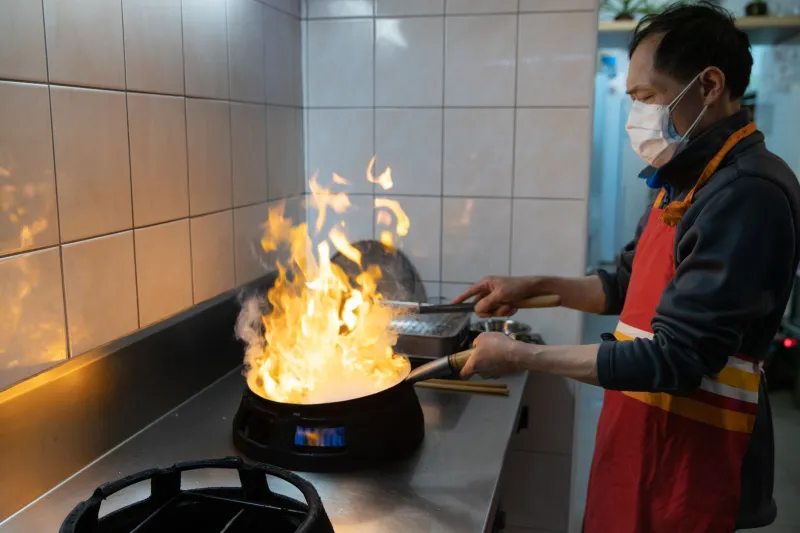
But here's where the myth gets built: most people assume wok hei is purely a product of heat. Crank the flame high enough, the thinking goes, and you'll get it automatically. That's not quite right. Wok hei is actually a combination of factors — high heat, yes, but also rapid moisture evaporation, the Maillard reaction happening on the surface of the food, a thin layer of vaporized oil combusting briefly in the pan, and the physical tossing of ingredients that keeps everything moving through that hot zone.
In other words, it's a process, not just a temperature setting.
The Real Reason Restaurant Stoves Win (And Where They Lose)
Commercial wok burners can hit 150,000 BTUs or more. A standard American home gas range tops out somewhere around 15,000 to 18,000 BTUs on its strongest burner. That gap is real and it matters. But here's what restaurants sacrifice that you don't have to: they're cooking in volume. A restaurant cook is cranking out dish after dish in rapid succession, and that constant use actually causes the wok to lose and regain heat repeatedly throughout service. The food going into that wok is also often prepped in large batches, sometimes sitting in containers before it hits the pan.
You, cooking at home on a Tuesday night, have a massive advantage: you're cooking small. One or two portions at a time. That means your pan — even your modest home burner — can actually stay closer to its peak temperature throughout the cook because you're not dumping a pound of cold vegetables into it every 90 seconds.
Small batches are your secret weapon. Never underestimate them.
Setting Yourself Up Before the Flame Even Goes On
A huge portion of what makes Thai stir-fries taste flat at home has nothing to do with the stove. It has everything to do with prep.
Dry your ingredients. Moisture is the enemy of wok hei. If your vegetables are wet from washing or your protein is sitting in marinade runoff, you're steaming your food instead of searing it. Pat everything down with paper towels before it goes anywhere near a hot pan.
Bring ingredients to room temperature. Cold protein straight from the fridge tanks your pan temperature fast. Give your chicken, shrimp, or tofu 20 minutes on the counter before cooking.
Have everything ready before the heat goes on. Thai stir-fries move fast — sometimes the whole cook is 3 to 4 minutes. If you're reaching for your fish sauce while garlic is burning, you've already lost the dish. Mise en place isn't just a French chef thing. It's survival in Thai cooking.
Working the Heat You Actually Have
Once your prep is dialed in, it's time to extract every bit of power from your burner.
Preheat longer than you think you need to. Put your wok or skillet on the flame and walk away for two full minutes. It should be visibly smoking before a single drop of oil goes in. Most home cooks don't wait long enough, and they pay for it with soggy results.
Use a carbon steel wok or a well-seasoned cast iron skillet. These materials hold and radiate heat far better than stainless or nonstick pans. A thin carbon steel wok, paradoxically, heats faster and responds to temperature changes more quickly than a thick-bottomed pan — which is exactly what you want.
Cook in the pan's hot spot. Home burners heat unevenly, and that's actually useful. Push your food toward the center where the heat is most concentrated, and use the edges as a resting zone. Move ingredients deliberately rather than just stirring constantly.
Let things sit. This is counterintuitive for stir-fry, but leaving your food in contact with the hot surface for 20 to 30 seconds before tossing it gives the Maillard reaction time to do its thing. That's where the char flavor comes from.
The Outdoor Trick Worth Knowing About
If you want to go a step further without spending money on a commercial wok burner, consider moving outside. A propane burner — the kind people use for crawfish boils or turkey frying — can hit 50,000 to 65,000 BTUs and costs under $50 at most hardware stores. Set it up on your back patio, and suddenly you're working with serious heat. It's a game-changer for those weekend cooking sessions when you want to go all out.
This isn't a requirement, though. Plenty of deeply satisfying Thai food comes out of regular home kitchens every day. The outdoor burner is a fun upgrade, not a prerequisite.
One More Thing Nobody Talks About
Flavor isn't only built in the wok. The quality of your aromatics, the balance of your seasoning, and the freshness of your ingredients contribute enormously to that "restaurant taste" you're chasing. A perfectly executed pad krapow with great holy basil, good fish sauce, and properly caramelized garlic will beat a mediocre version cooked on a commercial burner every single time.
Wok hei is a layer of flavor, not the whole picture. Chase it, but don't let the pursuit of it make you forget everything else that goes into a great Thai dish.
Your kitchen is more capable than you've been led to believe. Work with it.