Sticky Rice Goes Way Deeper Than Mango: What Thai Locals Are Actually Eating
Mango sticky rice is delicious. Nobody's disputing that. But if that's the only sticky rice you know, you're missing about 90 percent of the story — and honestly, some of the best parts.
In Thailand, glutinous rice isn't just a dessert vehicle. It's a staple, a tradition, and depending on where you are in the country, it might show up at breakfast, alongside a curry, or pressed into a banana leaf and grilled over charcoal at a night market. American Thai restaurants took one very photogenic version and ran with it. The rest of the tradition got left behind.
Let's fix that.
Why Sticky Rice Is Different From Regular Rice (And Why It Matters)
Glutinous rice — called khao niao in Thai — has almost no amylose starch. That's the compound that makes regular rice fluffy and separate. Instead, it's loaded with amylopectin, which is what gives it that characteristic chew and cling. When you steam it properly, the grains stick together without becoming mushy, and the texture is genuinely unlike anything else.
The key word there is steam. You don't boil sticky rice. You soak it overnight, then steam it in a bamboo basket over simmering water for about 20 to 25 minutes, flipping it halfway through. That process gives you the right texture — tender but slightly firm, with a satisfying pull when you pinch a piece between your fingers.
Most American recipes skip the overnight soak or try to cook it in a rice cooker. Both shortcuts produce something that's technically edible but texturally wrong — gummy in a bad way, without that clean chew.
The Northern Thai Version You've Never Tried
In northern Thailand, sticky rice isn't a dessert at all. It's the main starch at almost every meal. You eat it with your hands, pinching off a small ball, pressing a slight indentation into it with your thumb, and using it to scoop up curry, laab, or grilled meat.
This is khao niao as comfort food in its purest form — no coconut milk, no palm sugar, no mango. Just steamed glutinous rice with a clean, slightly nutty flavor that pairs beautifully with bold, funky, spicy dishes. The rice acts as a neutral base that cools the heat and rounds out the sharpness of fermented or acidic components.
If you've only ever eaten sticky rice as a sweet, try making a batch and serving it alongside a spicy ground meat salad or a simple curry. It will reframe everything you thought you knew about the ingredient.
Khao Tom Mat: The Banana Leaf Situation
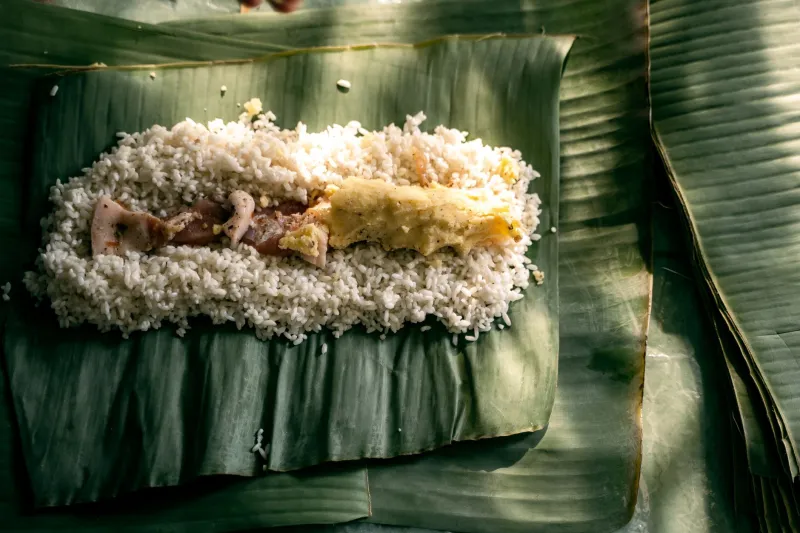
One of the most underrated sticky rice preparations in Thai cooking is khao tom mat — glutinous rice stuffed with banana and black beans, wrapped in banana leaves, and steamed or grilled until everything melds together.
The result is a compact, slightly smoky, subtly sweet package that's nothing like mango sticky rice in flavor or texture. The black beans add an earthy depth. The banana softens and almost disappears into the rice. The banana leaf imparts a faint grassy fragrance that you can't replicate with plastic wrap, so don't try.
To make it at home, you'll need to find banana leaves — most Asian grocery stores in the US carry them frozen. Soak your glutinous rice, partially steam it, mix in coconut milk and a little palm sugar, then wrap portions around pieces of banana and black beans. Tie them off and steam for another 30 minutes. They keep well and actually taste better the next day.
The Coconut Milk Question
Here's where American versions often go sideways. When coconut milk enters the sticky rice picture, restaurants tend to pour on a lot of it and sweeten it aggressively. The result is rich to the point of being cloying — great for a few bites, but not something you'd actually want to eat as a regular part of a meal.
Authentic coconut sticky rice uses a much lighter hand. The coconut milk is seasoned with salt — yes, salt — which cuts the sweetness and makes the flavor more complex. The ratio matters too. You want the rice to absorb the coconut milk, not swim in it. The finished texture should still have that distinct sticky rice chew, just enriched slightly and fragrant from the coconut.
For the coconut sauce that goes on top of mango sticky rice, the same logic applies. A little salt, not too much sugar, and a consistency that's pourable but not watery. Some cooks add a tiny amount of rice flour to thicken it just slightly. That small addition prevents the sauce from sliding off the rice and making everything soggy.
Regional Variations Worth Knowing
Beyond the north-south divide, sticky rice shows up in regional variations across Thailand that most American diners have never encountered.
Khao niao dam — black sticky rice — is a different variety entirely, with a deep purple-black color and a nuttier, more complex flavor than white glutinous rice. It's often cooked with coconut milk and served as a warm porridge-style dessert, sometimes topped with taro or pumpkin. The color alone makes it striking, and the flavor is genuinely different from anything you'd find on a standard Thai restaurant menu in the US.
Then there's khao lam, sticky rice cooked inside bamboo tubes over an open fire. The bamboo chars slightly, and the smoky, earthy flavor seeps into the rice as it cooks. It's a street food you find at markets and temple fairs — casual, portable, and completely delicious. Replicating it at home requires actual bamboo sections, which is a project, but the concept of infusing sticky rice with something aromatic during cooking is worth experimenting with even if you skip the bamboo.
How to Actually Get the Texture Right at Home
A few things make the difference between sticky rice that's genuinely good and sticky rice that's just okay.
First, soak your rice. Eight hours minimum, overnight preferred. This softens the grains and ensures even cooking. Skipping this step is the number one reason home cooks end up with unevenly cooked rice — chewy in some spots, mushy in others.
Second, use a proper steamer setup. A bamboo steamer over a wok works well. A metal steamer lined with cheesecloth works too. What doesn't work is trying to steam it in a covered pot without a basket — the rice will end up sitting in water and boiling instead of steaming.
Third, keep it covered after cooking. Glutinous rice dries out fast. Wrap it in a clean cloth or keep it in a bamboo sticky rice container (kratip khao) if you have one. They're inexpensive and work better than any modern alternative.
Mango sticky rice isn't going anywhere, and it shouldn't. But once you start exploring what glutinous rice actually does in Thai cooking — savory, sweet, steamed, grilled, plain, stuffed — the mango version starts to feel like just one chapter in a much longer and more interesting book.