Ditch the Drama: How Thai Home Cooks Really Move Food in the Pan (And What That Means for You)
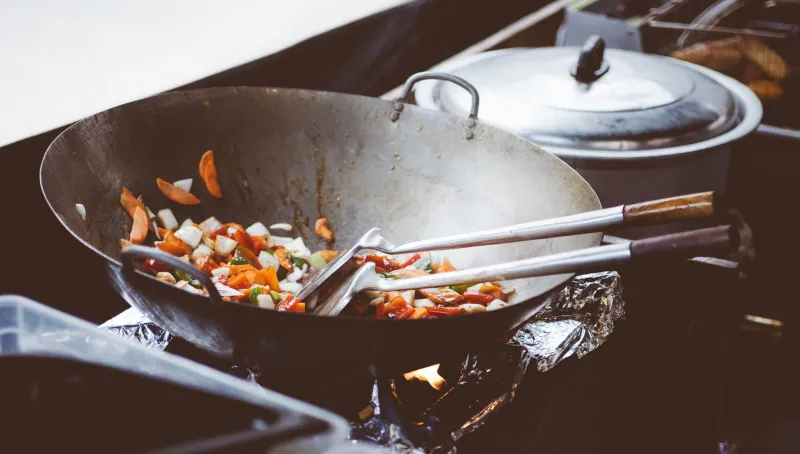
Somewhere between a YouTube tutorial and a Saturday afternoon cooking experiment, a lot of home cooks got the same idea: if they could just master the wok toss — that confident, one-handed flip that sends vegetables arcing through the air — their Thai food would finally taste right. It's a reasonable assumption. It looks impressive. It feels like the move that separates the serious cooks from everyone else.
Except here's the thing: most Thai home cooks aren't doing it.
Not the dramatic, restaurant-style, fireball-over-the-burner version, anyway. Walk into a home kitchen in Chiang Mai, Bangkok, or Ubon Ratchathani, and you're more likely to see someone working a wide metal spoon or a flat spatula with quick, deliberate strokes than performing acrobatic pan flips. The food comes out great. The technique is efficient. And nobody's burning their forearms in the process.
So why does the wok toss myth persist — and what should you actually be doing instead?
Where the Obsession Comes From
The wok toss became culturally loaded in the United States largely through Chinese restaurant cooking, where high-BTU commercial burners genuinely demand constant motion to prevent scorching. Food media picked it up, cooking shows amplified it, and somewhere along the way it got grafted onto Thai cooking as though the two cuisines shared identical techniques.
They don't.
Thai stir-fries — think pad kra pao, pad pak ruam, or a simple garlic-and-oyster-sauce vegetable dish — are often cooked with slightly less frantic energy than their Chinese counterparts. The flavor profile relies heavily on aromatics hitting hot oil first, sauce being added in deliberate stages, and ingredients being moved just enough to coat evenly and cook through. It's controlled. It's purposeful. And it doesn't require you to launch your dinner across the kitchen.
What Thai Cooks Are Actually Using
The tool of choice in a lot of Thai home kitchens is a large metal spoon — sometimes a deep-bowled one, sometimes flatter — used to scoop, fold, and press ingredients against the side of the wok or pan. A wide spatula works similarly. The motion is more of a continuous fold-and-scrape than a toss.
This technique does a few things really well. It keeps aromatics like garlic and chilies from flying out of the pan before they've had time to release their flavor into the oil. It lets the cook control exactly how much contact each ingredient has with the hot surface. And it's quiet — not the clanging, spattering chaos that wok tossing can become on an underpowered home burner.
In southern Thailand, where curries and stir-fries tend to use more liquid and coconut milk, the spoon is almost universal. You're stirring and folding sauce around proteins, not trying to get lift. Up north in Chiang Mai, where the cooking is a bit drier and more herb-forward, you might see slightly more aggressive movement — but still mostly tool-based, not wrist-based.
Why This Matters Specifically in American Kitchens
Here's the honest truth about your stove: it probably tops out somewhere between 10,000 and 15,000 BTUs on its best burner. A restaurant wok range runs at 100,000 BTUs or more. That gap is enormous, and it fundamentally changes what's possible.
When you toss food on a low-power burner, you're actually working against yourself. Lifting food off the pan surface drops the temperature of the ingredients and slows down the Maillard reaction — that browning and caramelization that makes stir-fried food taste good. You want more contact with the hot surface, not less. A spoon or spatula that keeps ingredients pressed against the pan is doing exactly that.
Professional Thai cooks who have worked in both Thailand and the US will tell you that they adjust their technique based on the equipment available. The goal is always the same — hot, fast, evenly cooked food with layered flavor — but the path changes depending on the heat source.
Building Speed and Control Without the Showmanship
So how do you actually get good at this? A few practical things to focus on:
Prep everything before the pan gets hot. This is non-negotiable. Thai cooking moves fast, and if you're reaching for the fish sauce while your garlic is burning, no technique in the world is going to save you. Have your aromatics, proteins, vegetables, and sauces in separate bowls and ready to go before you turn on the burner.
Use a wide, shallow pan if you don't have a wok. A 12-inch stainless steel skillet or a carbon steel pan with sloped sides gives you plenty of surface area and makes the fold-and-scoop motion much easier. Deep pans trap steam and make it harder to get browning.
Work in smaller batches than you think you need. Overcrowding is the enemy of good stir-fry. If you're cooking for four people, do it in two rounds and combine at the end. A half-full pan stays hot. A packed pan steams.
Let things sit for a moment before moving them. This is counterintuitive but important. When protein or vegetables first hit the pan, give them a few seconds of uninterrupted contact before you start moving. That's when you get color. Constant stirring from the first second prevents browning and leads to that gray, steamed texture that makes home stir-fry disappointing.
Keep your spoon moving in arcs, not circles. Scrape from the outside of the pan toward the center, fold, and push back out. This keeps ingredients rotating through the hottest zone without just spinning them around the same path.
The Real Goal Is Flavor, Not Performance
There's nothing wrong with eventually learning to toss a wok if you want to — it's a useful skill on the right equipment, and it's genuinely satisfying once it clicks. But tying your success in Thai cooking to that one technique is like deciding you can't make great pasta until you own a hand-cranked pasta machine. The tool isn't the point. The flavor is the point.
Thai home cooking has always been practical. It developed in kitchens with charcoal braziers and clay pots, adapted to whatever was available, and prioritized results over method. The cooks who make the best pad kra pao you've ever tasted aren't necessarily doing anything spectacular with the pan. They're doing something deliberate — and usually, they're doing it with a spoon.
Your American kitchen, with its gas or electric burner and a decent carbon steel pan, is more than capable of producing genuinely great Thai food. You just need to stop trying to make it look like a cooking competition and start paying attention to what's actually happening in the pan.
That shift in focus — from performance to process — is where the real improvement lives.