Funk, Time, and Flavor: Making Thai Fermented Condiments at Home (And Why It's Worth Every Day of Waiting)
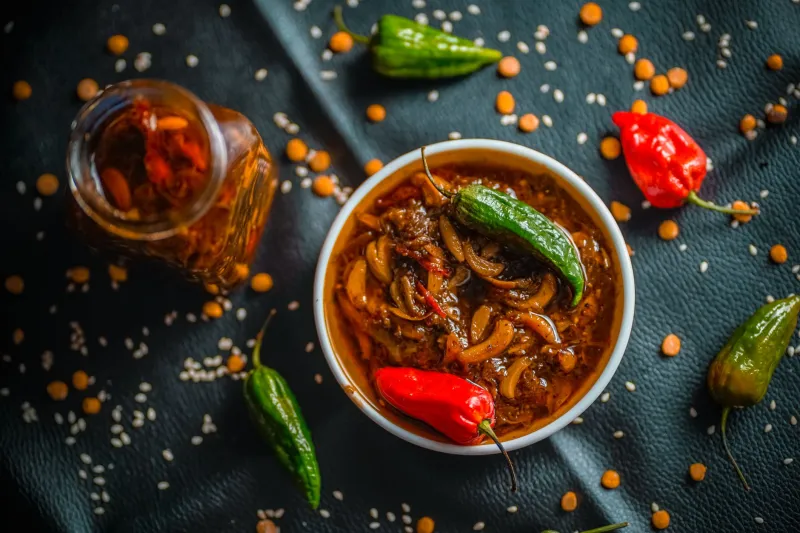
There's a jar of shrimp paste sitting on a shelf in practically every Thai kitchen, and most American home cooks treat it like a mysterious artifact — something to use sparingly, something vaguely intimidating, something that definitely came from an Asian grocery store and will stay that way. But here's the thing: the condiments and pastes that define authentic Thai flavor aren't locked behind a factory gate. They're the product of time, salt, and biology. And if you're willing to slow down a little, you can make them yourself — better than anything you'll find in a jar.
This isn't about being precious or going full homestead. It's about understanding what fermentation actually does to flavor, and then using that knowledge to cook Thai food that tastes genuinely alive.
Why Fermentation Matters So Much in Thai Cooking
Thai cuisine sits at a fascinating intersection of fresh and funky. You've got bright citrus, fresh herbs, clean heat — and then underneath all of that, these deep, umami-rich fermented ingredients that anchor everything. Shrimp paste (กะปิ, kapi), fish sauce, tamarind, pickled mustard greens, fermented black beans — these aren't garnishes. They're the backbone.
What fermentation does, chemically speaking, is break down proteins and sugars through microbial activity — bacteria, yeast, molds — transforming raw ingredients into something far more complex. Amino acids get released, creating glutamates (the natural source of that savory, mouthwatering depth we call umami). Acids develop, adding brightness and tang. Volatile compounds form that give fermented foods their characteristic funk — that smell that makes some people nervous but signals to experienced cooks that something serious is happening.
Store-bought versions of these condiments are often pasteurized, stabilized, or made with shortcuts that blunt exactly the kind of complexity fermentation is supposed to produce. When you make your own, you're working with live cultures, real time, and real transformation. The flavor isn't just stronger — it's layered in a way that processed versions simply can't replicate.
Tamarind Paste: Slow Sour Done Right
Most American cooks are buying tamarind concentrate in a jar, and while it's fine in a pinch, it's a pale version of what tamarind can actually taste like. Real tamarind paste — made from whole pods or pressed blocks — has a fruity, almost wine-like complexity that concentrate just doesn't deliver.
How to make it at home:
Start with a block of dried tamarind (widely available at Indian and Southeast Asian grocery stores). Break off about a cup's worth and soak it in two cups of warm water for 20 to 30 minutes. Once it's softened, work it with your hands, breaking it apart and dissolving the pulp into the water. Strain through a mesh sieve, pressing firmly to extract everything you can. Discard the seeds and fiber.
What you're left with is a thick, tart paste that keeps in the fridge for several weeks. For a more fermented character — closer to what you'd find in traditional Thai cooking — let the soaked, unstrained pulp sit at room temperature for 24 to 48 hours before pressing. The natural microbes on the fruit will begin a light fermentation, adding a subtle tang and depth that's noticeably different from the quick version.
Shrimp Paste (Kapi): The Funky Heart of Thai Cooking
Kapi is polarizing the first time you smell it. It's pungent, intensely savory, and deeply funky in a way that's hard to describe without just saying: trust the process. It's made by salting small shrimp or krill, then fermenting and drying the mixture over weeks or months. The result is a dense, purplish-brown paste that gets used in curry pastes, dipping sauces, and the beloved nam prik kapi.
Making genuine kapi at home takes patience — we're talking weeks, not hours — but the process itself is surprisingly straightforward.
A simplified home version:
Get the freshest small shrimp you can find (salad shrimp works well, or dried shrimp if fresh isn't available). For every pound of shrimp, use about a third of a cup of non-iodized sea salt. Iodized salt inhibits the bacteria you want, so skip it. Grind the shrimp and salt together into a rough paste using a food processor or mortar. Pack it into a clean glass jar, pressing out air pockets, and cover loosely with cheesecloth to let it breathe.
Leave it at room temperature — somewhere between 68 and 78°F is ideal — for five to seven days, stirring once daily. You'll notice the color deepen and the smell intensify. After the initial fermentation, transfer to the fridge and let it continue to mature for another two to three weeks. The longer it goes, the more complex it gets. What you'll end up with won't be exactly like commercially produced kapi (which is often sun-dried and much drier in texture), but the flavor profile will be remarkably close — and noticeably more nuanced than anything from a jar.
Pickled Chilies: Fast Ferment, Big Payoff
If the weeks-long commitment of shrimp paste feels like a lot, pickled chilies are your entry point into Thai fermentation. They're lacto-fermented — meaning salt water creates an environment where beneficial bacteria do the work — and they're ready in just a few days.
How to do it:
Slice Thai bird's eye chilies (or a mix of Thai chilies and serranos for a milder version) and pack them into a clean glass jar. Dissolve one tablespoon of non-iodized salt in two cups of filtered or non-chlorinated water — chlorine kills the bacteria you're cultivating — and pour over the chilies until fully submerged. Weigh them down with a small zip-lock bag filled with brine (this keeps everything under the surface). Cover loosely and leave at room temperature.
Within 24 to 48 hours, you'll see small bubbles forming — that's fermentation happening. By day three or four, taste one. The heat is still there, but it's mellowed and rounded, with a tangy, almost briny quality that raw chilies don't have. Use them as a condiment, chop them into dipping sauces, or serve alongside rice porridge the way they do across Thailand.
The Patience Principle
There's a reason fermented condiments are foundational to Thai cuisine and not just an interesting side project: they add a dimension of flavor that no amount of fresh ingredients can fake. That deep, savory, slightly funky backbone is what makes a bowl of curry or a plate of rice feel genuinely complete.
American food culture tends to be impatient. We want results fast, and the grocery store has trained us to think of condiments as things you buy, not things you make. But Thai cooks — home cooks especially — have always understood that some flavors only come with time. A week, a month, a slow transformation in a jar on your counter.
Start with the pickled chilies. They'll take four days and almost no effort. Then work up to the tamarind paste. By the time you're ready to tackle shrimp paste, you'll have developed the instinct for what fermentation smells and looks and tastes like — and you'll understand exactly why no store-bought version has ever quite hit the way it should.
That's the fermentation factor. And once you taste it, you won't go back.