First Fish Sauce, Then Lime: The Timing Secret Thai Cooks Use to Build Flavor From the Ground Up
There's a moment in a lot of home cooking sessions where everything gets dumped in at once. Fish sauce, lime juice, a pinch of sugar, maybe some chili flakes — all of it hits the pan (or the bowl) at the same time, and then you taste it and wonder why it doesn't quite sing the way Thai food is supposed to. The dish isn't bad. It's just... flat. Disconnected. Like a sentence where all the words are right but the punctuation is missing.
Here's the thing that most recipes don't spell out clearly enough: in Thai cooking, seasoning is a sequence, not a dump. The order in which you introduce fish sauce, lime, sugar, salt, and chili isn't a suggestion — it's the actual technique. And once you start treating it that way, the difference in your food is immediate.
Why Order Changes the Chemistry
Flavor isn't just about what's in the dish. It's about how each ingredient interacts with heat, with proteins, with acids, and with everything else in the pan at the moment it arrives. When you add fish sauce early in a stir-fry, for example, the heat drives off some of the sharper ammonia notes while the remaining glutamates — those savory compounds that make your mouth water — get a chance to bond with the other ingredients. The result is a deeper, more integrated saltiness rather than a sharp, surface-level hit of sodium.
Lime juice is the opposite story. Add it too early over heat and the volatile aromatic compounds that give fresh lime its brightness just evaporate. You're left with sourness but none of the floral lift. That's why Thai cooks almost always finish with lime — at the end of cooking, or right at the table. The acid stays sharp and fresh, cutting through richness rather than cooking into it.
Sugar is somewhere in between. Added early, it caramelizes and adds depth. Added late, it stays clean and sweet, balancing without transforming. Neither is wrong — but they produce different results, and knowing which one you want is half the battle.
The Sequence, Broken Down
Let's walk through how this actually plays out in practice.
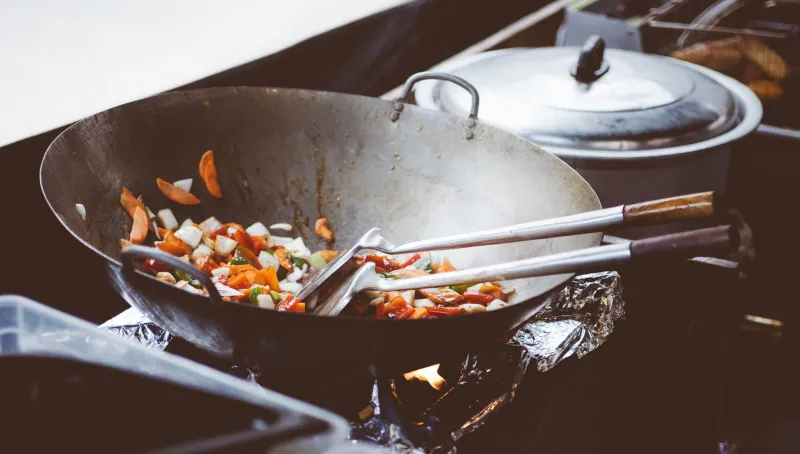
Start with your aromatics and fat. Before any seasoning hits the pan, you're building a base — garlic, shallots, lemongrass, galangal, dried chilies if you're using them. These need heat to open up. Seasoning too early at this stage just muddies things.
Fish sauce goes in early to mid-cook. Once your protein or main ingredients are in the pan and starting to take on some color, fish sauce enters. This is when it does its best work — the heat mellows the funk, the salt seasons from within rather than coating the surface, and the umami starts threading through the whole dish. Think of it less like adding salt and more like seasoning the air inside the pan.
Sugar follows shortly after. Depending on the dish, you might want a little caramelization (add it right after the fish sauce) or just a clean sweetness to balance (add it closer to the end). For most stir-fries, slightly earlier is better. For salads and cold dishes, add it with everything else and taste as you go.
Fresh chili comes in waves. Dried chilies and chili paste go in early, with the aromatics, so their heat and color can bloom in the oil. Fresh chilies — bird's eye, spur, whatever you're using — often go in twice: once early for heat, and once at the very end for brightness and texture. That layering is what gives Thai food its complex chili character rather than just a one-note burn.
Lime juice is almost always last. Off heat or right before serving. Squeeze it on, toss the dish, taste immediately. If it needs more, add more. But don't let it sit and cook — you'll lose everything that makes fresh lime worth using.
What This Looks Like in a Real Dish
Take a simple pad krapao — Thai basil stir-fry. A lot of American home cooks mix the sauce ahead of time (fish sauce, oyster sauce, a little sugar, maybe some water) and pour it all in at once. That works. You'll get a decent result. But try this instead:
Get your pan screaming hot. Add oil, then garlic and fresh chilies — let them sizzle for about 20 seconds. Add your ground meat and break it up. When it's about halfway cooked, splash in the fish sauce directly onto the meat. Let it sizzle and absorb for a moment before adding oyster sauce and a pinch of sugar. Finish with a handful of Thai basil and kill the heat. Squeeze fresh lime over the plate, not into the pan.
Same ingredients. Completely different experience. The meat tastes seasoned from the inside. The basil stays green and aromatic. The lime is bright and clean at the end rather than baked into the background.
Applying This to Cold Dishes and Salads
The sequence logic doesn't only apply to hot cooking. In a dish like larb or a simple cucumber salad, you're still building in order — just without heat doing the heavy lifting.
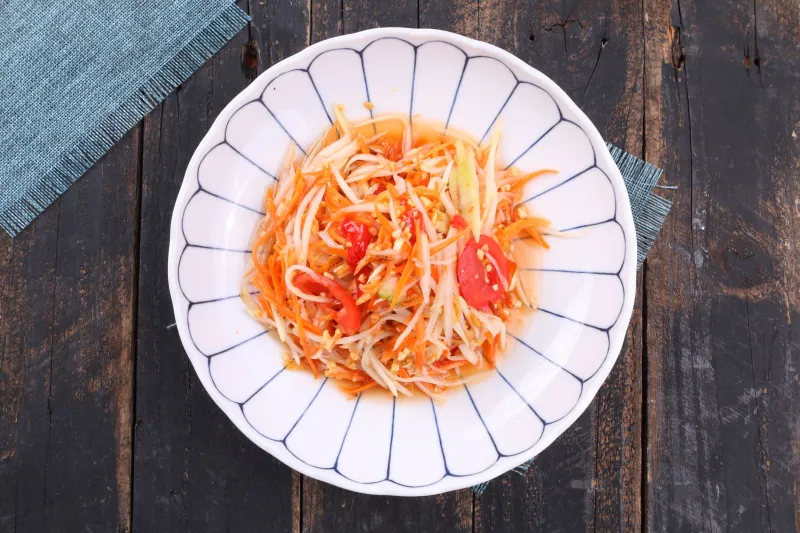
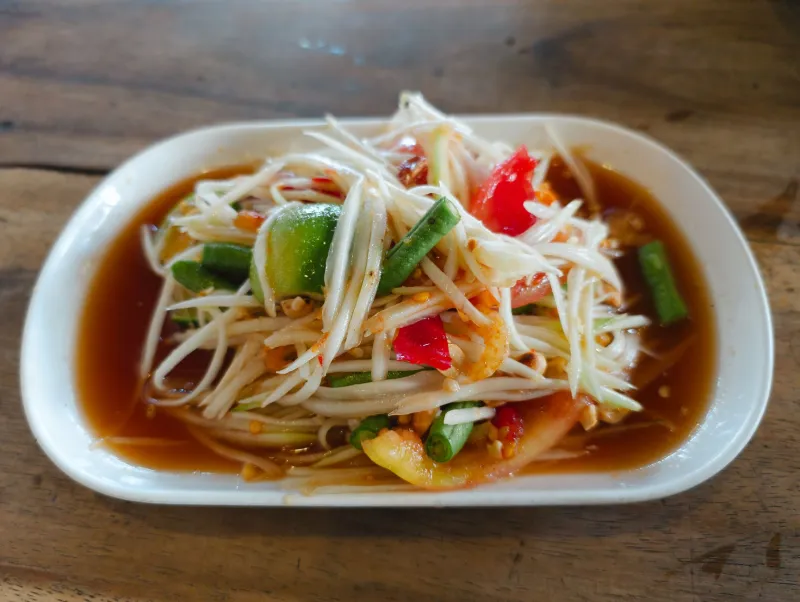
Start with the protein or vegetables, then add fish sauce and let it sit for a minute. It starts pulling moisture and seasoning from within. Then add sugar and toss. Then chili. Taste. Then lime — always last, always to taste. If you add the lime first, it starts cooking the protein (think ceviche), and the other flavors have a harder time penetrating. Sequence still matters, even when the stove is off.
Tasting Is Part of the Sequence
No seasoning sequence works without tasting at each stage. This isn't about following rigid steps — it's about understanding what each addition is doing and whether it's working. Thai home cooks taste constantly, and they're not just checking for salt. They're checking the balance, the direction, whether the dish needs to go deeper or brighter or hotter.
That instinct comes from understanding the sequence well enough that you know what to reach for when something's off. Too flat? Probably needs more fish sauce, not more salt. Too sharp? Maybe lime went in too early, or you need a touch more sugar. Too one-dimensional? You might have skipped a stage entirely.
The Bigger Picture
Once you internalize the seasoning sequence, something shifts in how you approach Thai cooking overall. It stops feeling like following a recipe and starts feeling like building something. Each ingredient has a job, and timing is part of that job description.
American cooking tends to front-load seasoning — salt your meat before it hits the pan, season the sauce before it goes in, measure everything out and add it together. Thai cooking is more conversational than that. You're talking to the dish as it develops, adding what it needs when it needs it, and the result is a kind of depth and cohesion that's genuinely hard to achieve any other way.
Start with fish sauce. End with lime. Everything else finds its place in between — and your food will taste like it finally knows where it belongs.