Thailand's Best Meal Is at 7 AM and Americans Have No Idea It Exists
Ask most Americans what they know about Thai food and you'll get a pretty predictable list: pad thai, green curry, tom yum, maybe mango sticky rice if they've been to a decent restaurant. That's not a knock — those are genuinely great dishes. But there's an entire meal category that almost never makes it onto American menus, and it might be the most underrated part of Thai cuisine.
Thai breakfast is its own world. It's warm and savory and slow. It's the kind of food that makes you want to sit at a plastic table on a Bangkok sidewalk with a cup of Thai iced coffee and watch the morning happen around you. And because almost no Thai restaurant in America serves it, the only real way to experience it is to cook it yourself.
That's actually great news.
Why Thai Restaurants Don't Serve Breakfast (And Why That's Your Opening)
The business model of most American Thai restaurants simply doesn't accommodate breakfast service. They open for lunch, maybe do a lunch special, and gear up for the dinner rush. Thai breakfast dishes also require a different pantry setup and prep logic than the lunch and dinner menu — rice porridge isn't exactly a natural addition to a kitchen optimized for curries and stir-fries.
There's also the perception problem. American diners coming to a Thai restaurant aren't arriving with breakfast expectations. The dishes aren't familiar enough to sell themselves from a menu description. So restaurants default to what customers already understand, and Thai breakfast stays invisible.
This creates a gap that home cooking fills perfectly. You're not constrained by a menu or customer expectations. You have a weekend morning, a stove, and a pantry. That's all you need.
Jok: The Rice Porridge That Will Change Your Saturday Morning
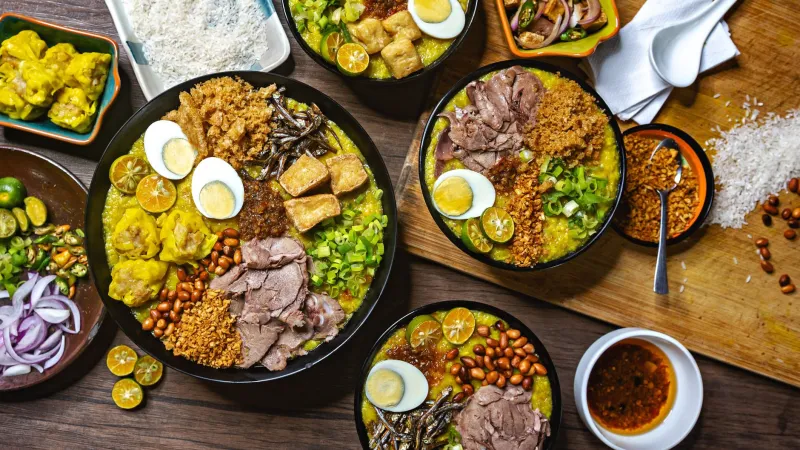
Jok is Thai rice porridge — similar in concept to Chinese congee, which some of you may already know and love. Long-grain jasmine rice is cooked down in a large volume of water or broth until the grains break apart and the whole thing becomes thick, creamy, and deeply comforting. It's mild on its own, which is the point — the flavor comes from what you put on top.
A classic jok setup includes a soft-cooked or raw egg stirred in at the end (the residual heat cooks it gently), minced pork or pork meatballs, thin-sliced ginger, crispy fried garlic, a drizzle of sesame oil, white pepper, and a splash of soy sauce. You can go lighter or heavier depending on how hungry you are and what you have on hand.
For the base, use jasmine rice and plan ahead. A ratio of about one cup of rice to eight cups of water or chicken broth works well. Cook it low and slow for 45 minutes to an hour, stirring occasionally, until it reaches a porridge consistency. Some people use a slow cooker overnight, which is a genuinely excellent idea for Sunday mornings.
The texture should be smooth and almost silky. If it's too thick, add more broth. Season with a little fish sauce at the end. The toppings are where you make it yours.
Khao Tom: Jok's Slightly More Textured Cousin
Khao tom is often mentioned in the same breath as jok, and they're similar enough that people sometimes use the names interchangeably. The key difference is texture: khao tom uses cooked rice that's been simmered in broth rather than broken down into a porridge. The grains stay mostly intact, making it looser and brothier than jok.
In practice, khao tom is a great use for leftover cooked rice. Drop it into simmering chicken or pork broth, cook for about ten minutes, and you have the base. Top it the same way you'd top jok — ginger, fried garlic, a soft egg, some kind of protein, fresh cilantro. It comes together faster than jok and has a lighter feel.
Both dishes are deeply restorative. They're the Thai equivalent of chicken soup — the food you want when you're tired, slightly under the weather, or just need something that feels like it's taking care of you.
Sai Oua: The Northern Thai Sausage Worth Seeking Out
If jok and khao tom represent the gentle, comforting end of Thai breakfast, sai oua is the bold, herbal, unapologetically flavorful counterpoint. This is a northern Thai sausage — specifically from the Chiang Mai region — packed with lemongrass, galangal, kaffir lime leaves, dried chilies, garlic, and shrimp paste. It's grilled or pan-fried and served sliced, sometimes with sticky rice and fresh vegetables.
Sai oua is harder to find ready-made in the US, though some Asian grocery stores in larger cities carry it. Making it at home is a project but an achievable one: grind pork shoulder, mix it with a paste of pounded aromatics, stuff into casings (or form into patties if you want to skip the casing step), and grill or pan-fry until cooked through and slightly charred at the edges.
The flavor is unlike any sausage in the American breakfast tradition — herbal, slightly funky from the shrimp paste, bright from the lime leaf, with a slow-building heat. Once you've had it, regular breakfast sausage feels like a missed opportunity.
Kai Jeow: The Thai Omelet You Can Make Right Now
Not every Thai breakfast requires a long prep window. Kai jeow — the Thai-style omelet — is fast, satisfying, and wildly underrated. It's made by beating eggs with a splash of fish sauce and frying them in a generous amount of oil over high heat, which creates crispy, lacy edges and a slightly puffy center. It's nothing like a French omelet. It's better for breakfast.
Serve it over jasmine rice with sliced cucumber on the side and a little sriracha or fish sauce-based dipping sauce. This is a real Thai breakfast that takes about seven minutes from start to finish. If you've never tried it, do it this weekend.
Make It a Weekend Ritual
The thing about Thai breakfast is that it rewards repetition. Jok gets better as you dial in your preferred thickness and toppings. Sai oua becomes less intimidating once you've made it a couple of times. Kai jeow takes thirty seconds to learn and the rest of your life to perfect.
These dishes represent a whole register of Thai cooking that most Americans have never encountered, and they're almost entirely yours to discover through your own kitchen. No restaurant menu required.