Your Wok Is Not Non-Stick and That's Exactly the Point
Somewhere between the unboxing video and the first batch of pad kra pao, a lot of home cooks make the same mistake. They season their new carbon steel wok, cook with it twice, scrub it down with dish soap because it smells a little off, and then wonder why food keeps sticking. The cycle repeats. The wok sits in a cabinet. A non-stick pan gets pulled out instead.
This is not a failure of effort. It's a failure of understanding what seasoning actually is — and what it isn't.
The Patina Problem
In American cooking culture, "seasoning" often gets conflated with a kind of magic coating. You do the thing once, you get the dark, slick surface, and from that point on your pan is basically bulletproof. Cast iron communities have built entire identities around protecting that patina like it's an heirloom.
A wok doesn't work that way. And Thai cooking — specifically the high-heat, fast-moving style that defines dishes like pad see ew, basil stir-fry, and morning glory with oyster sauce — doesn't ask your wok to be non-stick. It asks your wok to be reactive. There's a difference.
A well-seasoned wok has layers of polymerized oil baked into the metal's pores. Those layers build up over time and create a surface that's naturally slick under high heat with fat in the pan. But that surface is not fragile in the way people think, and it's also not permanent if you treat it wrong.
The obsession with protecting the patina at all costs is actually what keeps most home cooks from ever developing a truly functional wok.
What's Actually Happening When You Season
Carbon steel — the material used in virtually every serious Thai restaurant wok — is porous. When you heat oil past its smoke point in a thin layer against that metal surface, the oil breaks down and bonds chemically to the steel. That's polymerization. Do it enough times, in thin enough layers, and you build up a surface that releases food naturally and adds a subtle depth of flavor to everything cooked in it.
The key word there is thin. Thick layers of oil don't polymerize evenly — they pool, they stay tacky, they go rancid. This is why the "pour oil in and heat it up" approach that gets recommended all over the internet produces uneven results. You want barely a film of oil each time.
Restaurant woks in Thai kitchens don't get babied. They get used constantly, rinsed with hot water between dishes, dried over open flame, and hit with oil again before the next order. That repetition is the seasoning. Not a ceremony. Not a product. Just cooking.
How to Actually Season a New Wok
Start by washing your new carbon steel wok with hot soapy water to remove the factory coating. Yes, soap — this is the one time it's appropriate. Rinse thoroughly and dry it completely over medium heat on your burner.
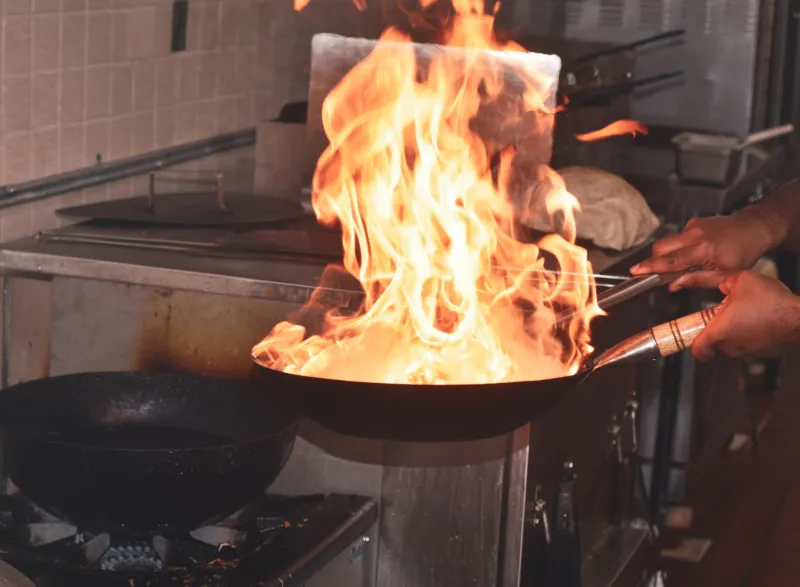
Once it's bone dry, crank the heat to high. Let the wok sit until you start to see it change color — it'll go from silver to yellow to a blueish-gray. This is the steel opening up. That's what you want.
Add about a teaspoon of a high smoke-point oil — flaxseed, rice bran, or refined avocado oil all work well. Use a paper towel held with tongs to wipe it across the entire interior surface in the thinnest possible layer. Then keep the heat high and let it smoke off. Repeat this three to five times in the same session.
After that initial seasoning, cook something fatty. Sliced pork belly. A handful of aromatics in a generous pour of oil. Something that's going to coat the surface and start building real layers through actual cooking, not just heat cycles.
Maintenance Is the Real Seasoning
Here's the part nobody talks about enough: the seasoning you do on day one is almost irrelevant compared to how you treat your wok over the next six months.
After each use, rinse with hot water while the wok is still warm. A soft brush or a chainmail scrubber is fine for stuck bits — avoid steel wool, which strips everything back to bare metal. Dry it immediately and completely over a burner flame. While it's still warm, wipe a tiny amount of oil across the surface. That's it. That's the whole routine.
Dish soap, left to sit in a soaking wok, will strip seasoning. Putting a wet wok away will cause rust. Letting it sit unused for weeks without a light oiling invites the same problem. None of these are catastrophic — rust can be scrubbed off and the seasoning process can restart — but they do explain why so many home woks never develop the surface that makes them worth cooking in.
Why This Actually Matters for Thai Food
Thai stir-fry cooking happens fast. We're talking thirty to ninety seconds of intense heat, constant movement, ingredients hitting a surface that needs to sear immediately rather than steam. A poorly seasoned wok can't do that job. Food sticks, moisture releases, and you end up with something braised and soft when you wanted charred and smoky.
That slightly bitter, deeply savory quality you taste in a good restaurant stir-fry — the one that's genuinely hard to reproduce at home — has a lot to do with the wok itself. Not just the heat, not just the technique, but the accumulated history of cooking that's baked into the surface. A wok that's been used daily for a year cooks differently than a wok that came out of the box last Tuesday.
You can't skip to the end. But you can stop making it harder than it needs to be.
The One Thing to Let Go Of
Stop trying to make your wok non-stick in the way a Teflon pan is non-stick. That's not the goal and it's not the standard. A properly seasoned carbon steel wok will release food cleanly when it's hot, oiled, and being used with confidence. It will stick when it's cold, under-oiled, or overcrowded.
Those aren't failures of seasoning. Those are just physics.
Once you accept that your wok is a tool that rewards use rather than protection, everything gets easier. Cook in it more. Rinse it, dry it, oil it, put it away. Cook in it again. That's the whole secret. The patina follows the cooking — not the other way around.