One Bottle Isn't Enough: The Three Soy Sauces Every Thai Cook Actually Needs

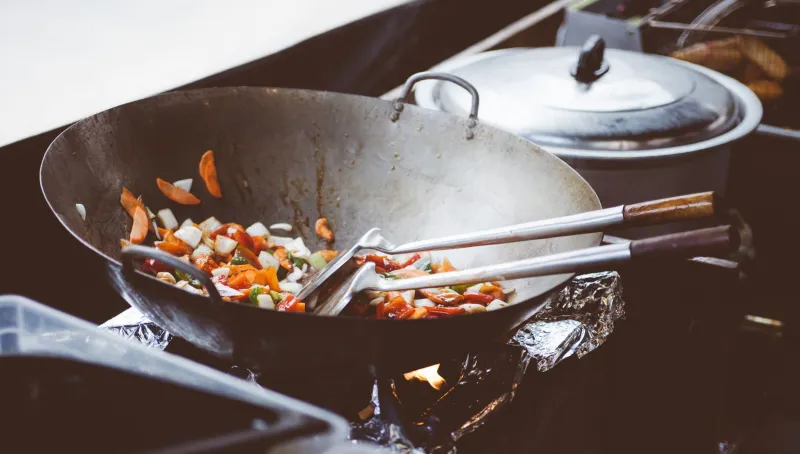
Here's a scene that plays out in a lot of American kitchens: you're making pad see ew or a quick stir-fry, the recipe calls for soy sauce, and you grab whatever's closest — probably a bottle of Kikkoman that's been sitting next to the stove since last year. The dish comes out fine. Decent, even. But something's off. It tastes a little flat, a little one-note, like you're hearing the melody but missing the harmony.
That's the soy sauce problem. And it's more common than people realize.
Thai cooking doesn't treat soy sauce as a single ingredient. It treats it as a category — one with at least three meaningfully different players, each doing a specific job in the kitchen. Understanding which one to reach for, and when, is one of those small adjustments that quietly fixes a lot of the "why doesn't mine taste like the restaurant's" frustration.
Let's break it down.
Light Soy Sauce: The Everyday Workhorse
Despite the name, light soy sauce isn't low-sodium. "Light" here refers to color — it's thinner and paler than its counterparts, and it's the one doing the heaviest lifting in Thai cooking day to day.
In Thai, it goes by si-ew khao (ซีอิ๊วขาว), which literally translates to white soy sauce. Brands like Healthy Boy and Maekrua are the go-to bottles you'll find in most Thai households and restaurant kitchens. It's saltier than regular Japanese soy sauce and has a sharper, cleaner flavor that doesn't muddy up a dish visually or taste-wise.
This is what you use when a recipe needs soy sauce as a seasoning layer — not a flavor feature. Think of it the way you think about fish sauce: it's in the background, boosting everything else. You'll find it in marinades for grilled meats, in the base of stir-fry sauces, and as a table condiment in northern Thai cooking. It seasons without staining, which matters when you're trying to keep a dish bright.
If you've only got one Thai soy sauce in your pantry, make it this one. But don't stop there.
Dark Soy Sauce: Color, Depth, and That Glossy Finish
Si-ew dam (ซีอิ๊วดำ) is the one that looks almost like molasses in the bottle — thick, nearly black, and intensely fragrant. It's been fermented longer and often has added caramel or palm sugar, which gives it a subtly sweet edge and a syrupy consistency.
Here's what dark soy sauce is actually for: color and depth, not salt. It's less salty than light soy and way less salty than fish sauce. Using it as a straight substitute for light soy will leave your dish under-seasoned and strangely sweet. That's a mistake worth avoiding.
Dark soy sauce is what gives pad see ew those gorgeous, caramelized-looking noodles. It's what adds that deep mahogany tone to braised pork leg (khao kha moo) and gives Thai-style fried rice a richer visual presence. A small amount — and it really is a small amount — transforms the look and adds a subtle complexity that light soy alone can't deliver.
The rule of thumb: dark soy is a supporting player. You add it for finish and visual impact, then let light soy (or fish sauce) do the actual seasoning work. Together, they create something neither can do alone.
Sweet Soy Sauce: The One That Surprises People
This is the one most American cooks don't know about until they've eaten something in Thailand and thought, "wait, what is that?"
Si-ew waan (ซีอิ๊วหวาน) is thick, sweet, and almost syrupy — closer in texture to Indonesian kecap manis than to anything you'd find in a Japanese grocery store. It's used sparingly, mostly as a dipping condiment or a finishing element, and it brings a gentle molasses-like sweetness that doesn't read as "added sugar" — it just reads as depth.
You'll see it most often alongside crispy fried eggs, drizzled over simple rice dishes, or used as a dip for Chinese-Thai style roast meats. Some cooks use a small amount in marinades where they want sweetness and color at the same time without reaching for palm sugar separately.
If you can't find it at your local Asian grocery store, it's worth the trip to a Thai or Southeast Asian market specifically. No good substitute really exists. A touch of regular dark soy with a pinch of sugar gets you in the neighborhood, but it's not the same.
Why Fish Sauce Doesn't Replace Any of Them
A lot of people assume that because fish sauce is the dominant seasoning in Thai cooking, soy sauce is optional or interchangeable with it. That's not quite right.
Fish sauce and soy sauce occupy different flavor lanes. Fish sauce brings that funky, fermented, deeply savory quality — the backbone of so much Thai food. Soy sauce, particularly the light variety, adds a different kind of saltiness that's cleaner and less assertive. In many dishes, they work together as a team. Pad see ew, for example, uses both. So does a lot of Thai fried rice.
Dropping one in favor of the other shifts the flavor profile in ways that are hard to correct after the fact. They're not rivals. They're collaborators.
A Quick Cheat Sheet for Your Kitchen
If you're standing in the Asian grocery store aisle feeling overwhelmed, here's the short version:
- Light soy sauce (si-ew khao): Everyday seasoning. Goes in stir-fries, marinades, sauces. Think Healthy Boy brand. This is your main bottle.
- Dark soy sauce (si-ew dam): Color and depth. Use a little in noodle dishes and braises. Not for seasoning alone.
- Sweet soy sauce (si-ew waan): Finishing and dipping. A little goes a long way. Grab it for eggs, rice dishes, and roasted meats.
All three are available at most Asian grocery stores, and online if you're not near one. They're not expensive, and a bottle of each lasts a long time since you're rarely using large quantities of the dark or sweet varieties.
The Bigger Picture
Thai cooking has a lot of moving parts — the balance of salty, sweet, sour, and spicy, the layering of aromatics, the timing of heat. Soy sauce tends to get overlooked in all of that because it feels like background noise. But the background is where a lot of the difference between "pretty good" and "genuinely great" lives.
Once you've got all three bottles on your shelf and you start using them for what they're actually designed for, a lot of those small frustrations — the flat stir-fry, the noodles that won't color up right, the dish that tastes like it's missing something — start to resolve themselves.
It's one of those fixes that feels almost too simple. Until you taste the difference.